
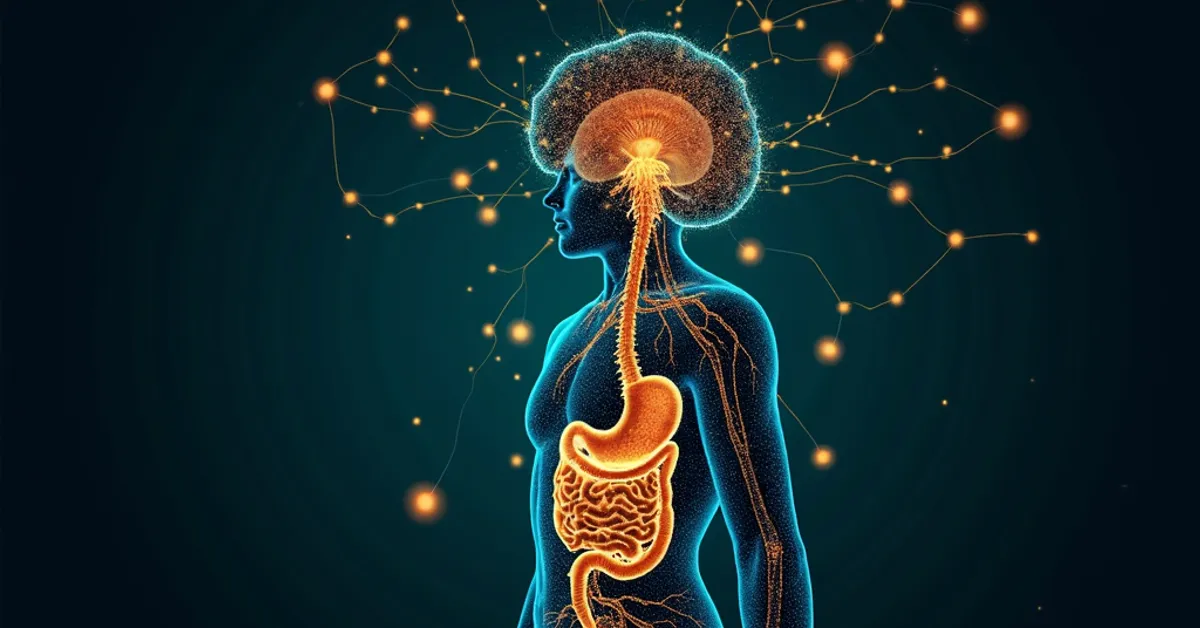
When researchers talk about the gut-brain axis, they are describing a bidirectional communication network linking the enteric nervous system in your digestive tract with the central nervous system in your brain. This is not a metaphor. The vagus nerve, microbial metabolites, immune signals, and neurotransmitter precursors all move through this system continuously. What researchers are now exploring is whether lion’s mane mushroom (Hericium erinaceus) can influence both ends of this axis in ways that benefit cognitive function and digestive health simultaneously.
The short answer from the available research: yes, there is a credible biological mechanism, and the early evidence is promising enough to warrant attention.
Understanding the Gut-Brain Axis
Your gut contains roughly 500 million neurons, more than the spinal cord. This enteric nervous system communicates with the brain primarily via the vagus nerve, which carries signals in both directions. The gut also produces approximately 90-95% of the body’s serotonin, not as a direct brain neurotransmitter (gut-produced serotonin does not cross the blood-brain barrier) but as a signaling molecule that influences gut motility, immune function, and the signals the gut sends upward to the brain.
The trillions of microorganisms in the gut microbiome participate in this communication by producing short-chain fatty acids, neurotransmitter precursors, and other metabolites that influence inflammation levels, intestinal barrier integrity, and vagal nerve signaling. When the microbiome is dysregulated, which researchers call dysbiosis, these signals shift in ways associated with increased systemic inflammation, compromised barrier function, and changes in mood and cognition (PMID: 32094589).
This is the context in which lion’s mane’s gut-health properties become particularly interesting.
How Lion’s Mane Interacts With the Gut
Prebiotic Effects on the Microbiome
Lion’s mane contains significant amounts of beta-glucans, the primary polysaccharide class in medicinal mushrooms. Beta-glucans are not digested by human enzymes; they pass into the large intestine where they serve as substrate for beneficial bacteria, functioning as prebiotics. Research published in 2017 demonstrated that Hericium erinaceus polysaccharides selectively promoted growth of beneficial Lactobacillus and Bifidobacterium species while modulating overall microbial diversity in animal models (PMID: 29099549).
Increased populations of these bacteria are associated with improved production of butyrate, a short-chain fatty acid that serves as the primary energy source for colonocytes, strengthens the intestinal barrier, and has anti-inflammatory effects both locally and systemically.
Intestinal Barrier Support
Intestinal barrier integrity is a central concern in gut-brain axis research. When tight junction proteins between intestinal epithelial cells are compromised, bacterial components and inflammatory metabolites can translocate into systemic circulation, a condition colloquially called “leaky gut” that contributes to systemic inflammation and neuroinflammation. Several polysaccharide fractions from Hericium erinaceus have shown ability to support tight junction protein expression and reduce markers of intestinal permeability in preclinical studies (PMID: 32094589).
Anti-Inflammatory Signaling
Lion’s mane contains compounds with well-documented anti-inflammatory properties, including hericenones and various polysaccharide fractions that modulate NF-kB signaling pathways. Neuroinflammation is increasingly recognized as a contributing factor in cognitive decline and mood disorders. By reducing inflammatory load at the gut level, lion’s mane may help reduce the systemic inflammatory signals that reach the brain via gut-brain axis pathways.
The NGF Connection: From Gut to Brain
The most studied mechanism of lion’s mane’s cognitive effects is its stimulation of nerve growth factor (NGF) synthesis. NGF is a protein essential for the growth, maintenance, and survival of neurons. Hericenones from the fruiting body and erinacines from the mycelium both cross the blood-brain barrier and upregulate NGF expression (PMID: 18844328).
Here is where the gut-brain axis becomes particularly relevant: the enteric nervous system is rich in NGF-sensitive neurons. NGF supports the maintenance of enteric neurons just as it supports central nervous system neurons. Research suggests that erinacine A, one of the most potent erinacines in lion’s mane mycelium, stimulates NGF synthesis in both peripheral and central nervous system tissues (PMID: 23557368).
This means lion’s mane may be exerting beneficial effects on the nervous system through both the brain end and the gut end of the gut-brain axis simultaneously; a dual mechanism that makes it a genuinely interesting candidate for research on cognitive and gut health outcomes together.
For a detailed look at lion’s mane’s neurological research, see our overview of lion’s mane and nerve growth factor.
Research on Mood, Stress, and the Gut-Brain Link
The gut-brain axis is central to emerging research on mood and anxiety. Gut dysbiosis is associated with elevated inflammatory markers and altered neurotransmitter production, both of which influence mood states. Lion’s mane has been examined in this context with noteworthy results.
A 2010 clinical study in Japan found that women consuming lion’s mane cookies over four weeks reported reduced scores on depression and anxiety measures compared to placebo, along with reduced sleep-related complaints (PMID: 20834180). While this study was small and used a food-based intervention, the results align with the proposed mechanism: improved gut microbiome composition and reduced inflammatory signaling contributing to better mood outcomes.
For a broader look at the anxiety-related research, our lion’s mane and anxiety research review covers the clinical evidence in more detail. The MFL blog also maintains a useful resource on the gut-brain axis research that connects well to the mechanisms discussed here.
Practical Implications: What This Means for Supplementation
Timing and Consistency
Given that both the prebiotic effects on the microbiome and the NGF synthesis pathway operate on cumulative timelines, consistent daily use is more important than the exact time of day you take lion’s mane. Microbiome changes from prebiotic supplementation typically show measurable shifts within 2-4 weeks of regular use. NGF-related cognitive effects in clinical research tend to emerge at the 4-8 week mark.
Pairing With Probiotic Support
If your primary interest is the gut-brain axis pathway, combining lion’s mane with a quality probiotic is a logical approach. Lion’s mane provides the prebiotic substrate; probiotics provide the beneficial bacterial populations that can ferment that substrate into butyrate and other beneficial metabolites. This is a complementary pairing backed by basic gut microbiology principles, though direct clinical research on the combination specifically is limited.
Choosing the Right Extract
For gut health applications specifically, beta-glucan content is the most relevant quality marker. A quality lion’s mane mushroom complex should specify beta-glucan content on the label, with 20% or higher being the standard benchmark for therapeutic-grade extracts. For the cognitive side of the equation, hericenone and erinacine content from fruiting body extraction matters equally.
The MFL journal’s overview of functional mushrooms research provides useful comparative context if you are evaluating lion’s mane alongside other medicinal mushrooms.
What the Research Does Not Yet Tell Us
The gut-brain axis research on lion’s mane is genuinely exciting, but intellectual honesty requires acknowledging where the evidence is still developing. Most of the mechanistic research on gut barrier function and microbiome modulation is from animal studies. Human clinical trials specifically examining the gut-brain axis effects of lion’s mane are limited in number and scale. The cognitive benefits from human trials are more established, but the specific contribution of gut-axis pathways versus direct CNS effects has not been fully separated in research designs.
This does not mean the mechanism is speculative. The biological plausibility is strong, the animal model data is consistent, and the indirect human evidence from mood and cognitive studies aligns with what the mechanism would predict. It means we should read the research with appropriate precision and expect more definitive human studies over the next several years.