
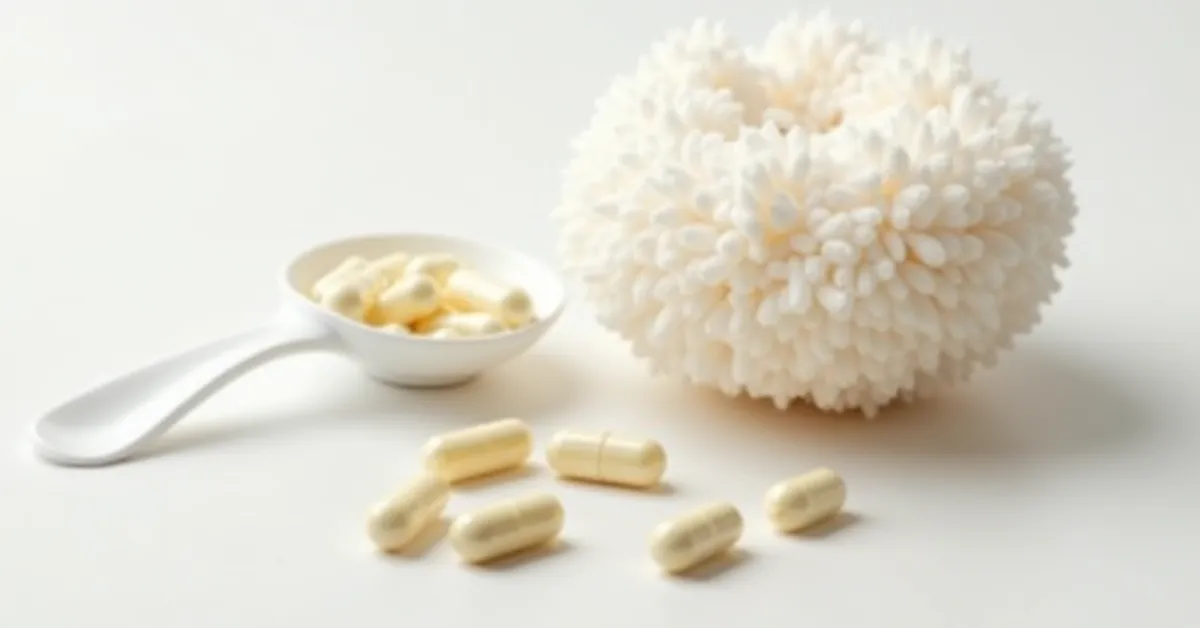
Lion’s mane dosage recommendations vary widely across the supplement market, and not all of them are grounded in the clinical research. The “right” dose depends on what you’re trying to accomplish, the quality and concentration of the product you’re using, and how long you plan to take it. This guide covers what clinical trials have actually used, how to interpret label claims, and what a practical evidence-based protocol looks like.
Disclosure: This post contains affiliate links. We may earn a commission if you purchase through our links, at no extra cost to you. We only recommend products we trust.
What Clinical Research Has Used
The most cited clinical trial on lion’s mane and cognitive function is a 2009 Japanese study by Mori and colleagues, published in Phytotherapy Research. Thirty adults over age 50 with mild cognitive impairment were randomized to receive either 3 grams per day of lion’s mane powder (in tablet form) or placebo for 16 weeks. The lion’s mane group showed significant improvements on cognitive assessment scores, with effects declining after supplementation stopped. This 3-gram dose represents the most robustly tested amount in cognitive research (PMID: 18844328).
A 2010 study on anxiety and mood in women used approximately 0.5 grams per day through a food format, with significant improvements in anxiety and irritability scores at four weeks (PMID: 20834180). A 2023 trial in young adults with stress and mild anxiety used 1.8 grams per day of standardized extract for 28 days and found reductions in anxiety and depression scores. These two studies suggest that lower doses may be adequate for mood-related outcomes compared to the higher doses studied for cognitive decline.
A study on post-surgery nerve recovery used 3 grams per day and found faster recovery in the lion’s mane group. Research on lion’s mane’s effects on mild cognitive impairment has consistently used 2 to 3 grams per day of powder equivalent.
Taking these together: the research doesn’t point to a single universal dose. The dose-response relationship likely varies by outcome, with mood and stress benefits potentially achievable at lower doses (1-2 grams) and cognitive or neuroprotective benefits requiring higher amounts (2-3 grams).
Why Product Quality Completely Changes the Equation
Dosage only makes sense in the context of what’s actually in the capsule. This is where most lion’s mane supplement comparisons break down.
High-quality lion’s mane supplements made from fruiting bodies (the actual mushroom cap, not the root-like mycelium) contain hericenones and beta-glucans, the compounds most studied for cognitive and NGF-stimulating effects. A 500 mg capsule of 8:1 fruiting body extract may contain the equivalent of 4 grams of whole mushroom, meaning two capsules could deliver what clinical research used at 3 grams of powder.
Mycelium-on-grain products, which are grown on rice or oats and then dried and powdered without separating the mushroom from the grain, are primarily starch by weight. Lab analyses of several mycelium-on-grain products found that grain content constituted 50-70% of the total weight, meaning a 1,000 mg capsule might deliver only 300-500 mg of actual lion’s mane. This is why some consumers take high doses of these products and experience no effect: they’re mostly consuming grain powder.
The label distinction to look for is “fruiting body” or “fruiting body extract” with a stated beta-glucan percentage (typically 20-30% for quality products). Our article on fruiting body vs mycelium lion’s mane covers this in full detail.
Practical Dosing for Common Goals
Based on available clinical research and expert frameworks, here are evidence-informed dose ranges by goal:
General cognitive support and focus: 500-1,000 mg of standardized fruiting body extract (8:1 or higher) twice daily, equaling 1-2 grams of extract per day. For whole powder products without extraction concentration, 2-3 grams per day. Take with breakfast and lunch or breakfast and early afternoon to align with cognitive performance windows.
Mood, stress, and anxiety support: 500-1,000 mg of standardized extract once or twice daily, equaling 0.5-1.8 grams per day. The 2010 Nagano mood study used as little as 0.5 grams in a food format and found effects. The 2023 anxiety trial used 1.8 grams. Starting at 1 gram per day is reasonable.
Neuroprotection and cognitive decline prevention: 2-3 grams per day of concentrated extract, or the equivalent in whole powder (may require 5-6 grams of non-extracted powder to reach comparable active compound levels). This is the dose range used in trials targeting cognitive impairment outcomes.
Sleep and relaxation: Limited specific research exists here, but anecdotal reports and the anti-inflammatory mechanism suggest 1-2 grams in the evening. Our article on lion’s mane for sleep covers the available evidence.
When to Take Lion’s Mane
Timing matters less than consistency, but there are logical reasons to take lion’s mane at specific times depending on your goals.
For cognitive function and focus: morning is the most common recommendation, as NGF-stimulated neuronal activity aligns well with daytime demands. Studies on cognitive outcomes typically had participants take their doses in the morning.
For mood: the research hasn’t found a time-sensitive pattern. Once-daily morning dosing is practical and what most trials have used.
For sleep: evening dosing is reasonable, though the evidence for lion’s mane specifically improving sleep is limited. If you’re sensitive to any stimulating effects (some users report vivid dreams or mild energy effects), morning is safer.
With or without food? Research hasn’t found significant difference in absorption. However, taking it with food is generally better tolerated for those who experience digestive sensitivity at higher doses.
How Long Until Lion’s Mane Works
Lion’s mane is not an acute-acting supplement. The mechanism, NGF-stimulated neurogenesis, is a structural change in brain tissue that develops over weeks. The Mori 2009 cognitive study found significant score improvements by week 8, with continued improvement through week 16. The anxiety studies found effects by week 4. Our detailed article on how long lion’s mane takes to work breaks down the timeline by goal and study.
A reasonable expectation: subtle changes in focus or mood within 2-4 weeks, more noticeable cognitive effects at 8+ weeks. If no effects are noticed after 8-12 weeks of consistent use at an appropriate dose from a quality product, the supplement may not be having a meaningful effect for that individual.
Are High Doses Safe?
Lion’s mane has an excellent safety profile across clinical research. The Mori 2009 study used 3 grams per day for 16 weeks with no adverse events. Studies using higher doses in preclinical research haven’t found toxicity signals at doses relevant to human supplementation.
Reported side effects in humans are rare and generally mild: occasional digestive discomfort at high doses, rare reports of skin sensitivity, and isolated cases of breathing difficulty in people with mushroom allergies. No drug interactions are clinically established, but because lion’s mane promotes neuroplasticity through NGF, some caution is suggested for people already taking medications that affect neurological function (PMID: 25784670).
The practical upper limit for well-researched human supplementation is around 5-6 grams of whole powder per day, with most benefits appearing well before that ceiling. For standardized extracts, 2-3 grams daily is within the studied range and represents a reasonable maximum for most users.
Choosing the Right Product
Look for supplements that:
- State “fruiting body” as the source, not just “mycelium” or “mushroom complex”
- List a beta-glucan percentage (20%+ is a good marker of quality)
- Provide a clear extract ratio (8:1 is common; higher is more concentrated)
- Come from third-party tested manufacturers
Me First Living’s Mushroom Max Complex includes fruiting body lion’s mane in a standardized complex. Also available on Amazon.